Negatively Charged Lipid Nanoparticles Reduce mRNA Vaccine Side Effects (Yoshioka Lab, in J. Controlled Release)
Points
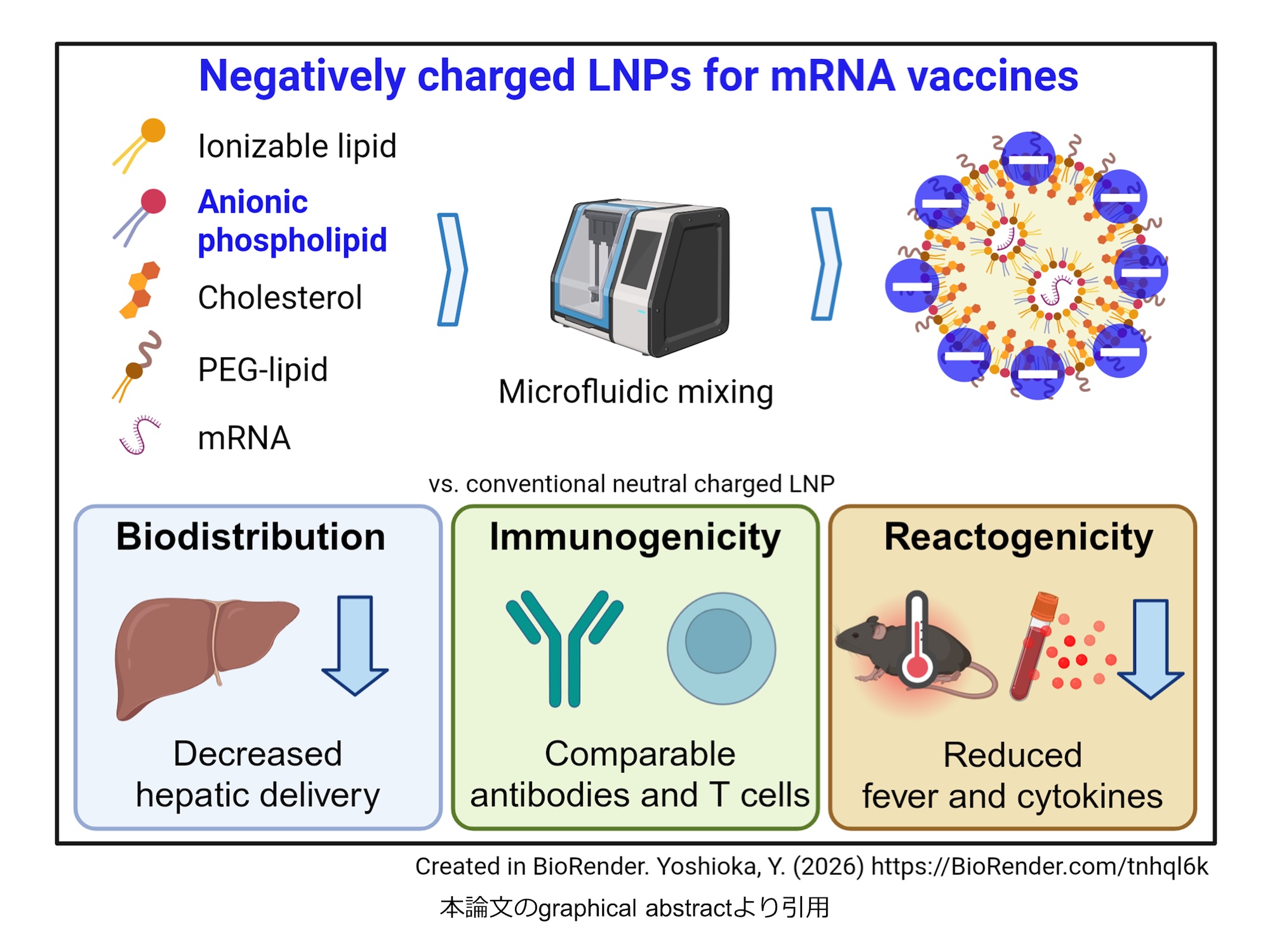
- Developed negatively charged lipid nanoparticles (LNPs) by modifying their lipid composition.
- Significantly reduced fever and systemic inflammation following mRNA vaccination in mice.
- Maintained antigen-specific immune responses comparable to those induced by conventional LNPs.
- Found that reduced LNP delivery to the liver was associated with lower fever responses, providing new insights for developing mRNA vaccines with fewer side effects.
Summary
Researchers at The University of Osaka, led by Professor Yasuo Yoshioka, have developed a new lipid nanoparticle (LNP) design that reduces the side effects of mRNA vaccines.
By modifying the lipid composition to give LNPs a negative surface charge, the team significantly reduced fever and systemic inflammation in mice while maintaining immune responses comparable to those induced by conventional LNPs. The negatively charged LNPs also showed reduced accumulation in the liver, which was associated with lower fever responses.
Published in Journal of Controlled Release, these findings offer a promising approach to developing next-generation mRNA vaccines with fewer side effects.
This article was published in Journal of Controlled Release on Oct. 24, 2026.
Title: Rationally designed negatively charged lipid nanoparticles reduce systemic reactogenicity of mRNA vaccines while preserving immunogenicity
Authors: Tatsuya Karaki, Wakana Inoue, Tang Gis, Shintaro Shichinohe, Tokiko Watanabe, Toshiro Hirai, Yasuo Yoshioka
DOI:10.1016/j.jconrel.2026.115490
Links
- Home
- Achievement
- Research Activities
- Negatively Charged Lipid Nanoparticles Reduce mRNA Vaccine Side Effects (Yoshioka Lab, in J. Controlled Release)