
Establishing a platform for the development of a novel live-attenuated rotavirus vaccine (Kobayashi Lab, PLOS Pathogens)
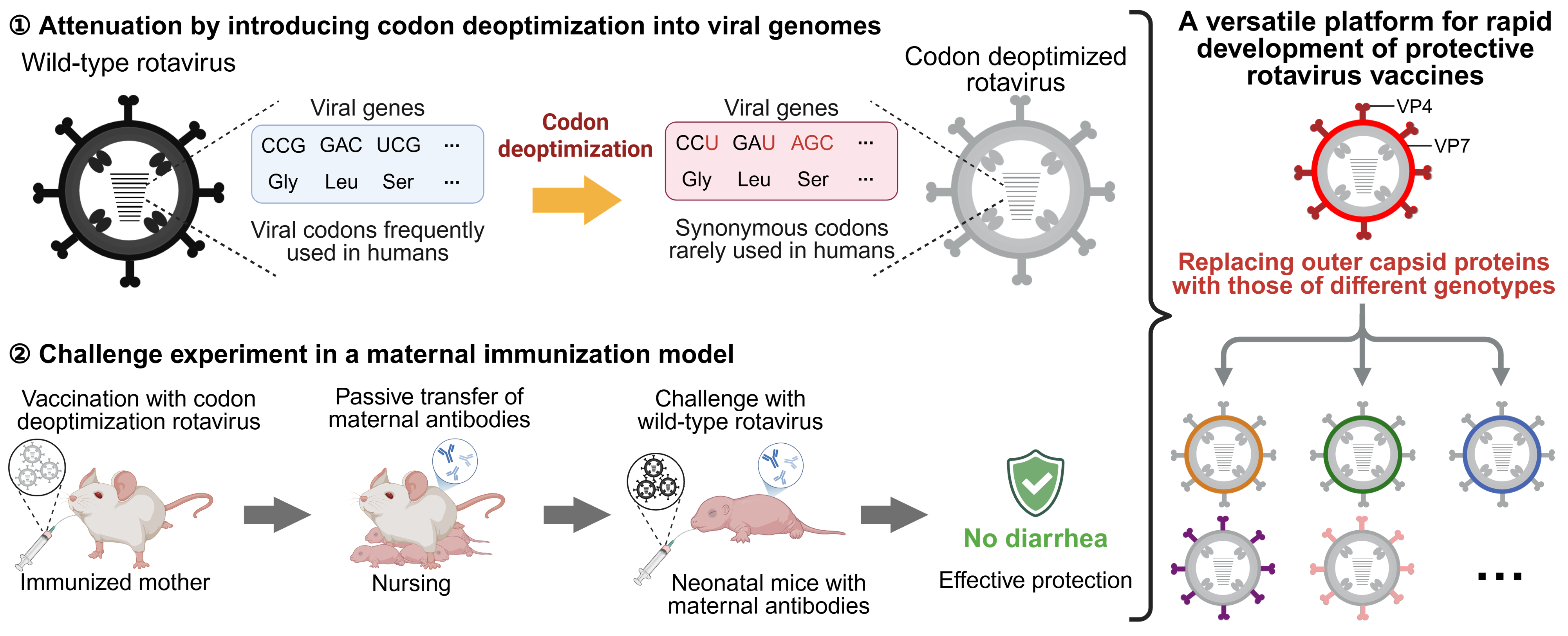
Rotavirus infection causes acute diarrhea in infants and young children, resulting in underestimated pediatric public health issues, especially in low-income countries. In the absence of specific antiviral therapies, vaccination remains the most effective strategy for reducing rotavirus-associated morbidity and mortality. Because of technical limitations, reverse genetics approaches have not been utilized in the development of rotavirus vaccines. The present study found that a codon deoptimized rotavirus showed highly attenuated replication in vivo, suggesting the safety of this live-attenuated vaccine. In addition, this codon deoptimized rotavirus elicited robust immune responses in mouse models, protecting neonatal mice from infection with wild-type rotavirus. These findings demonstrate that the codon deoptimized rotaviruses are effective candidates for live-attenuated vaccines and underscore the potential of codon deoptimization as a rapid-response platform for novel vaccine development.
This article was published in PLOS Pathogens on July 7, 2026.
Title: “A rotavirus vaccine candidate attenuated by codon deoptimization protects neonatal mice against wild-type virus infection”
Authors: Zelin Chen, Tomohiro Kotaki, Daisuke Motooka, Shintaro Sato, Yusuke Sakai, Katsuhisa Hirai, Shohei Minami, Takahiro Kawagishi, Yuta Kanai, Takeshi Kobayashi
Links
- Home
- Achievement
- Research Activities
- Establishing a platform for the development of a novel live-attenuated rotavirus vaccine (Kobayashi Lab, PLOS Pathogens)