
Transcription Factor PbAP2-TR Is Essential for Malaria Parasite Development in Blood (Iwanaga Lab, Nat Commun)
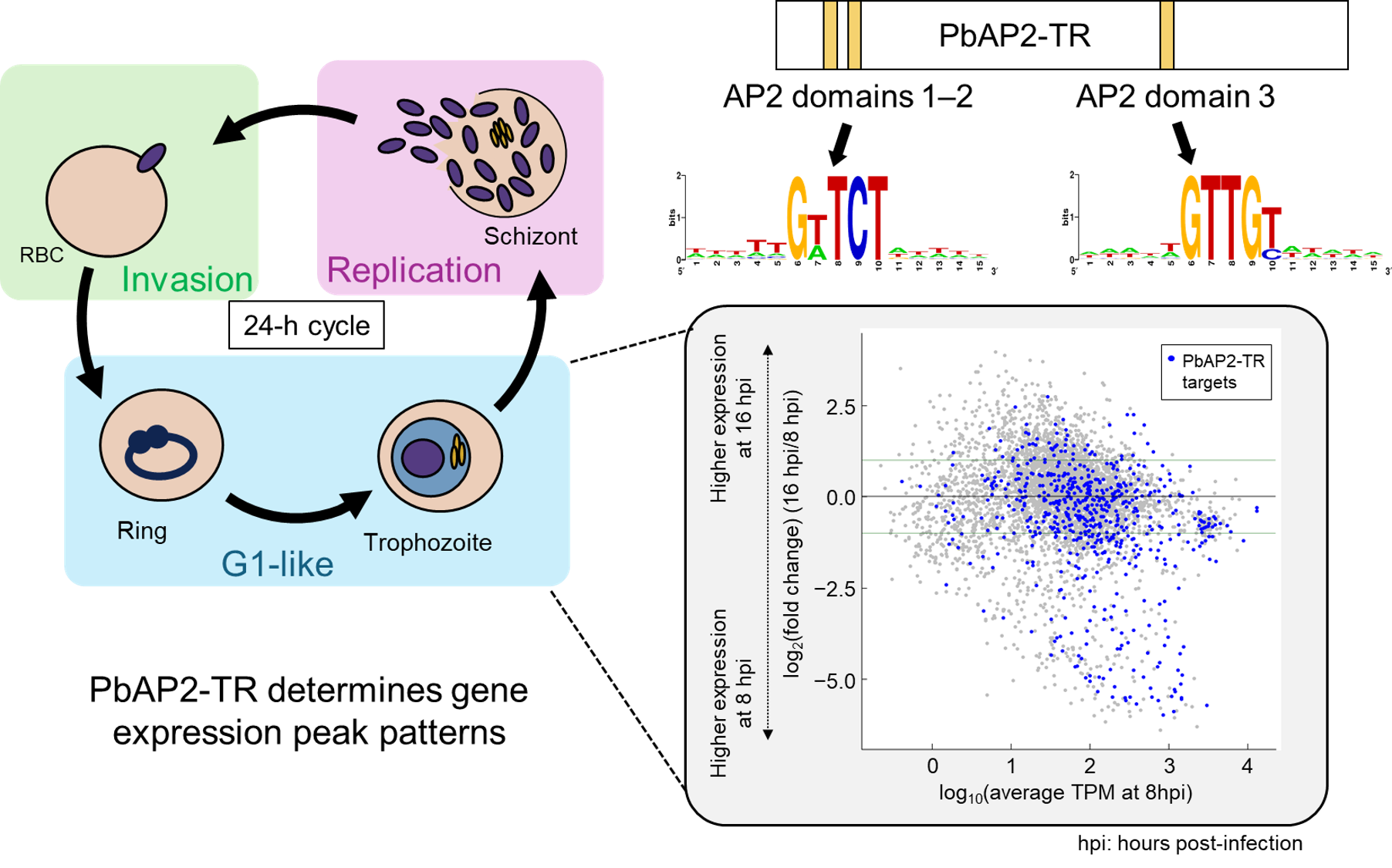
Malaria is caused by the proliferation of Plasmodium parasites in the vertebrate host blood stream through repeated cycles of asexual multiplication inside erythrocytes. During these cycles, parasites dynamically change their transcriptome at each developmental step to express genes exactly when required; however, the mechanisms regulating these transcriptomic changes remain unclear. In this study, we reveal that the AP2-family transcription factor PbAP2-TR is essential for the asexual blood stage development of the rodent malaria parasite Plasmodium berghei, as a transcriptional repressor. Conditional knockout of pbap2-tr causes developmental arrest at the trophozoite stage, i.e., the cell growth phase of asexual blood stage development. The expression of PbAP2-TR target genes is upregulated in pbap2-tr-knockout parasites, and introduction of mutations into the binding motifs increases the promoter activity of the target genes. Time-course transcriptome analysis shows that PbAP2-TR is largely responsible for the transcriptional downregulation from early to late trophozoite development. Furthermore, our data demonstrate that PbAP2-TR recruits a putative chromatin remodeler, PbMORC, as a co-factor. These results indicate that transcriptional repression by PbAP2-TR-PbMORC complex contributes on precise control of transcription peak patterns during the asexual blood stage development.
This article was published in Nature Communications on January 3, 2026.
Title: “Precise gene regulation through transcriptional repression is essential for Plasmodium berghei asexual blood stage development”
Authors: Tsubasa Nishi, Izumi Kaneko, Shiroh Iwanaga, Masao Yuda
Links
- Home
- Achievement
- Research Activities
- Transcription Factor PbAP2-TR Is Essential for Malaria Parasite Development in Blood (Iwanaga Lab, Nat Commun)