
Recovery of Infectious Recombinant Human Norovirus Using Zebrafish Embryos (Kobayashi Lab, in PNAS)
Human norovirus (HuNoV) is the leading cause of gastroenteritis. However, the lackof a reverse genetics system for infectious HuNoV has hindered the development of antivirals and vaccines. Herein, we established a reverse genetics system for infectious HuNoV using a robust HuNoV replication system based on zebrafish embryos. Transfection of a HuNoV cDNA clone into cultured cells, followed by microinjection of the supernatant into zebrafish embryos, produced infectious recombinant HuNoVs.The recombinant HuNoVs can replicate in human intestinal organoids, confirming their infectivity in a physiologically relevant system. Notably, we also recovered recombinant HuNoVs following direct HuNoV cDNA microinjection into zebrafish embryos without the use of cultured cells, which is a simpler and more efficient approach. Using the established systems, we recovered an infectious recombinant HuNoV carrying a reporter tag insertion, enabling rapid antiviral evaluation and virus inactivation assays. Furthermore, we generated recombinant HuNoVs of the GII.17 and GII.4 genotypes, as well as a chimeric virus carrying the GII.4 VP1 gene in a GII.17 backbone, demonstrating the utility of the systems for viral replication studies. These systems will accelerate research on HuNoV replication and enhance efforts to develop vaccines and antivirals.
This article was published in PNAS in December 2025.
Title: “Recovery of Infectious Recombinant Human Norovirus Using Zebrafish Embryos”
Authors: Tomohiro Kotaki, Yuki Akieda, Zelin Chen, Megumi Onishi, Sayuri Komatsu, Daisuke Motooka, Hiroko Omori, Shigeyuki Tamiya, Yuta Kanai, Shohei Minami, Takahiro Kawagishi, Naomi Sakon, Shintaro Sato, Tohru Ishitani, and Takeshi Kobayashi
DOI: 10.1073/pnas.2526726122
Links
-
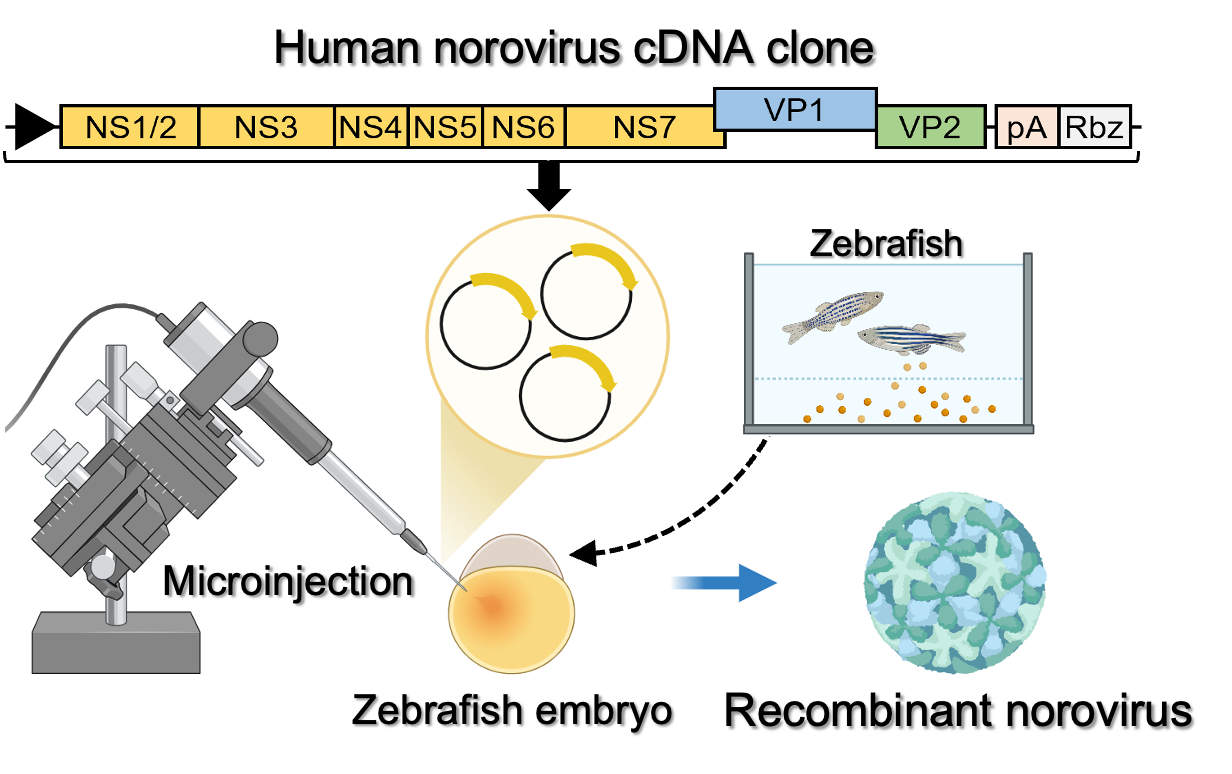
Fig.1: Outline of Recombinant Human Norovirus Generation Using Zebrafish Embryos
- Home
- Achievement
- Research Activities
- Recovery of Infectious Recombinant Human Norovirus Using Zebrafish Embryos (Kobayashi Lab, in PNAS)