
Nat Commun. 6:6255 2015/02/17
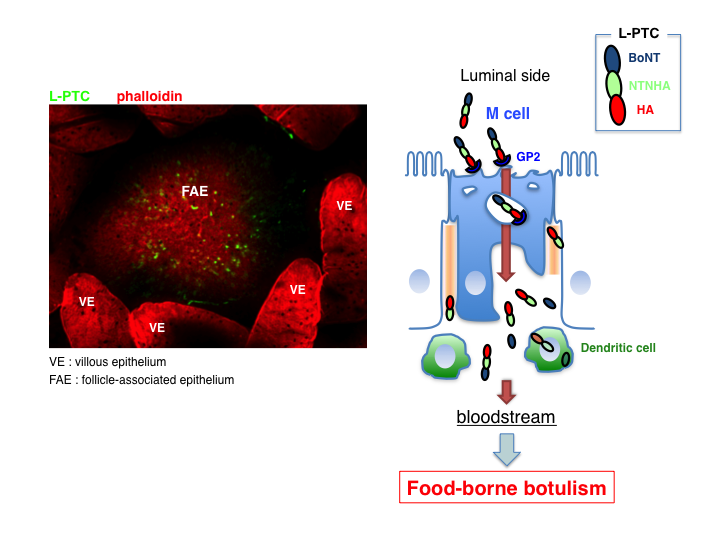
The botulinum neurotoxin (BoNT) produced by C. botulinum, which elicits flaccid paralysis, is one of the most toxic proteins known. BoNT forms complexes by associating with non-toxic proteins; these neurotoxin complexes cause food-bone intoxication. To cause disease, orally ingested BoNT complexes must take a long journey to reach their targets, i.e., peripheral nerves; these extremely potent bioactive proteins are unique in this respect. In order for orally ingested BoNT (150kDa) to enter the body, it must cross the intestinal epithelial barrier. The mechanism by which this large protein toxin surmounts this obstacle remains unknown. In this study, we found that BoNT complex (serotype A1) invades the host through intestinal M cells by using GP2 on the apical surface of M cells as an transcytotic receptor. This process is mediated by a non-toxic protein, HA. Both M cell-depleted mice and GP2-deficient (Gp2–/–) mice were significantly less suceptibilible to orally administered BoNT complex. Our initial insight into the mechanism of the BoNT entry should enable future development of more effective therapies for this disease. Furthermore, the targeting effect of BoNT complex (HA component) to the M cells could be exploited to allow delivery of drugs and vaccine antigens across the intestinal epithelium.
Links
- Home
- Achievement
- Research Activities
- Nat Commun. 6:6255 2015/02/17